Orthodontics
Straight teeth, healthy airways, balanced faces.
Our orthodontics goes beyond straightening teeth. We develop the dental arches, protect the airway, and guide facial growth through Phase 1 and Phase 2 treatment for children, alongside traditional braces for teens and adults.



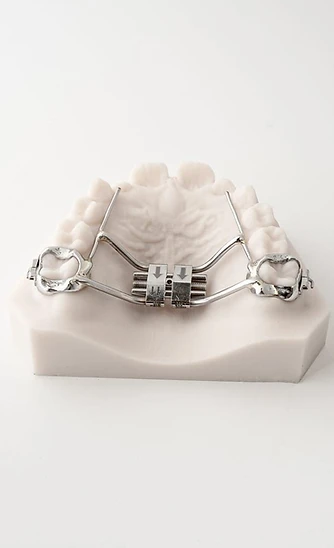




Traditional Braces
Precise, time-tested tooth movement
Modern traditional braces remain the most predictable orthodontic system for complex alignment, bite correction, and severe crowding.
Today's traditional braces use smaller, more comfortable brackets and heat-activated wires that gently guide teeth into place. For complex cases, severe crowding, rotations, or significant bite mismatches, fixed braces offer a level of control that clear aligners cannot always match.
We feature Damon™ Ultima brackets, the flagship of the Damon self-ligating system and a modern evolution of traditional braces. Instead of elastic or metal ties, each bracket uses a built-in slide mechanism to hold the wire in place. This dramatically reduces friction, so teeth move more freely, more comfortably, and often faster, with lighter forces that are gentler on the bone and tissue supporting them.
Braces are also the most efficient option for growing teens whose adult teeth are still settling into place. Treatment is customized at every adjustment visit, so your smile progresses on a predictable timeline.
- Most precise control for complex cases
- Damon™ Ultima self-ligating brackets, no elastic ties
- Lower friction for more comfortable, efficient movement
- Often fewer adjustment visits needed
- Efficient for teens and adults alike
- Predictable, adjustable at every visit
- Often shorter treatment than aligners for severe cases
Phase 1 Orthodontics
Early treatment for growing smiles
Phase 1 orthodontics, performed between ages 6 and 10, guides jaw and arch development while your child is still growing, preventing more complex problems later.
Phase 1 (early interceptive) orthodontics takes advantage of a child's growth to develop the dental arches, correct crossbites, and create room for incoming adult teeth. A narrow upper arch, crowding, or a crossbite left untreated can restrict the airway, distort facial growth, and lock in the need for extractions or surgery later.
Using a palatal expander and limited braces, Phase 1 treatment widens the arch, improves breathing, and often makes later treatment shorter and simpler, sometimes eliminating the need for Phase 2 entirely. Early evaluation around age seven lets us catch these issues while growth is still on our side.
- Guides jaw and arch development during growth
- Widens a narrow arch with a palatal expander
- Corrects crossbites and crowding early
- Supports healthy airway and facial balance
- Often shortens or avoids later Phase 2 treatment
Phase 2 Orthodontics
Comprehensive alignment of the full smile
Phase 2 orthodontics completes the alignment once all adult teeth have erupted, refining the bite and finish that Phase 1 set up.
Phase 2 treatment typically begins around age 11–13, once all permanent teeth have come in. Building on the arch development from Phase 1, full braces or aligners detail the bite, close any remaining gaps, and perfect the final alignment of every tooth.
Because Phase 1 already created the space and arch form, Phase 2 is usually shorter and more comfortable than starting from scratch. The result is a stable, healthy bite and a confident smile that lasts into adulthood.
- Begins once all adult teeth have erupted
- Refines the bite and final alignment
- Shorter thanks to Phase 1 groundwork
- Stable, lasting result
- Braces or aligners depending on the case
Airway & Arch Development
Why the arch matters for breathing
A narrow dental arch often signals a restricted airway. Orthodontic arch development can improve breathing, sleep, and facial balance.
The width of the dental arch reflects the space available for the tongue and the size of the airway behind it. A narrow arch frequently goes hand in hand with mouth breathing, snoring, and sleep-disordered breathing in children, conditions that can affect focus, behavior, growth, and overall health.
By developing the arches rather than simply extracting teeth to relieve crowding, airway-focused orthodontics creates room for the tongue to rest properly, opens the airway, and supports balanced facial growth. We screen every child for mouth breathing, tongue posture, and airway concerns as part of their orthodontic evaluation.
- Connects arch width to airway health
- Addresses mouth breathing and snoring
- Supports balanced facial growth
- Develops arches instead of extracting teeth
- Screens for sleep-disordered breathing
Patient Transformations
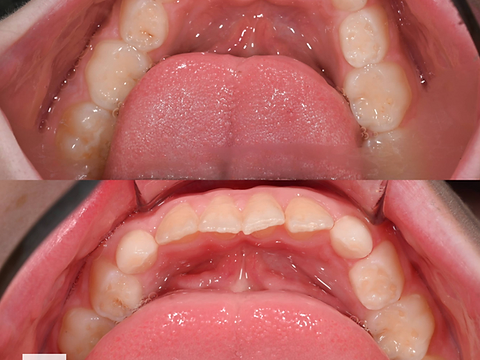
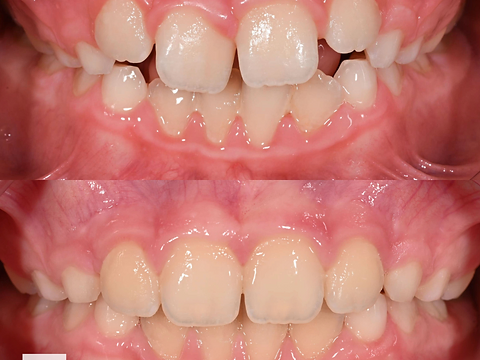
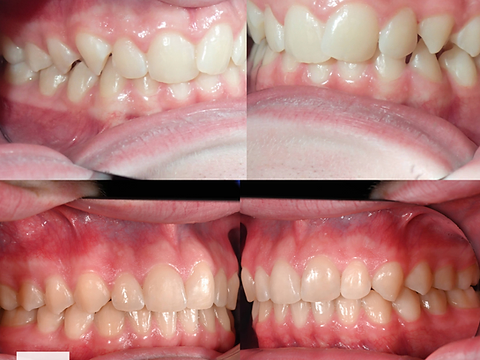
Smile Gallery
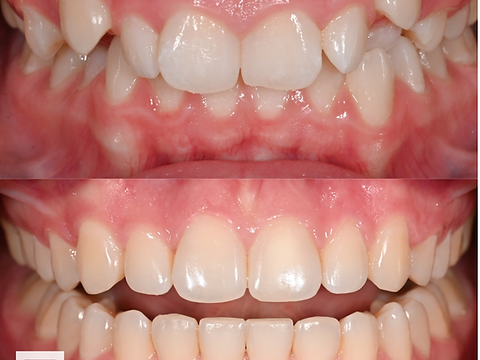
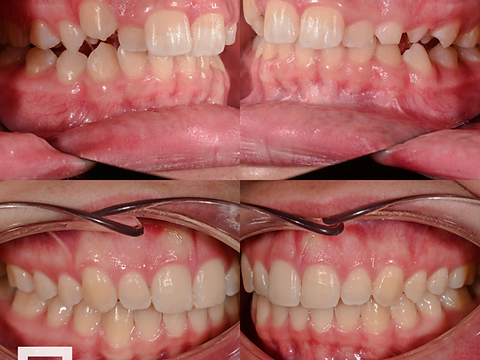
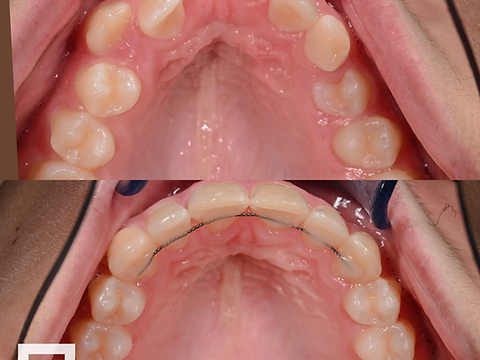
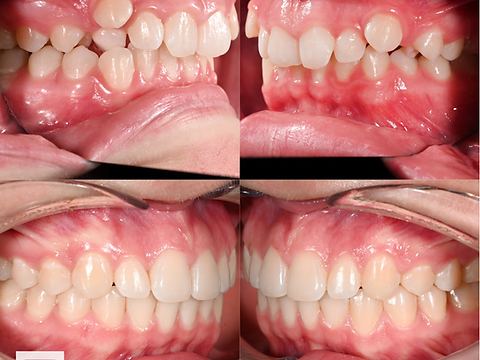
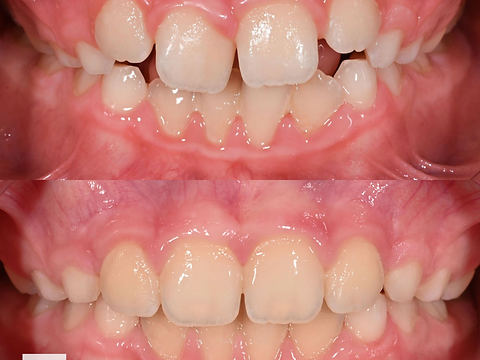
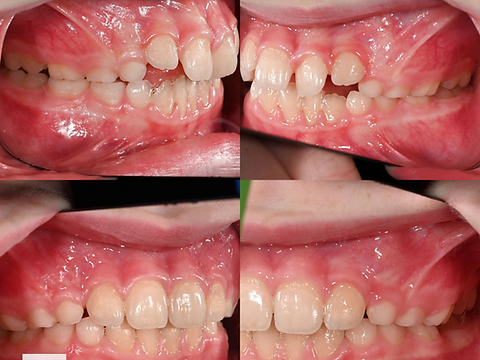
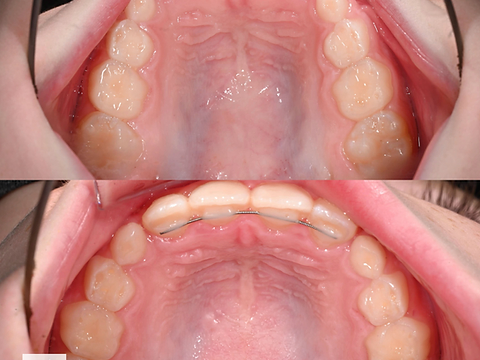
Real HE Dental KC orthodontic cases, crowding corrected, arches developed, bites balanced. Scroll to explore.










Orthodontic Questions
Common questions about orthodontics
At what age should my child first see an orthodontist?
The American Association of Orthodontists recommends a first orthodontic evaluation by age seven. At this age the back molars have erupted and we can assess the bite, arch width, and airway while growth is still available to guide. Most children don't need treatment yet, but early evaluation lets us plan for Phase 1 if it becomes necessary.
What is the difference between Phase 1 and Phase 2 orthodontics?
Phase 1 is early interceptive treatment between ages 6–10 that develops the arches, corrects crossbites, and supports the airway while the jaw is still growing. Phase 2 is comprehensive treatment, usually around age 11–13, that aligns all the adult teeth and refines the bite. Not every child needs Phase 1, but when they do, it often makes Phase 2 shorter and simpler.
How does orthodontics affect the airway?
A narrow upper arch often leaves too little room for the tongue to rest properly, which can push the tongue back and narrow the airway. Arch development and palatal expansion widen the arch, create room for the tongue, and can improve mouth breathing, snoring, and sleep-disordered breathing in growing children.
Are traditional braces better than clear aligners?
For complex alignment, severe crowding, or significant bite correction, traditional braces offer more predictable control. For milder cases, clear aligners are an excellent option. We recommend the right tool for your specific needs at your consultation.
Schedule an orthodontic evaluation.
Whether it's your child's first visit or braces for yourself, we'll assess the bite, arch, and airway and outline a clear plan.
Request Your Consultation